


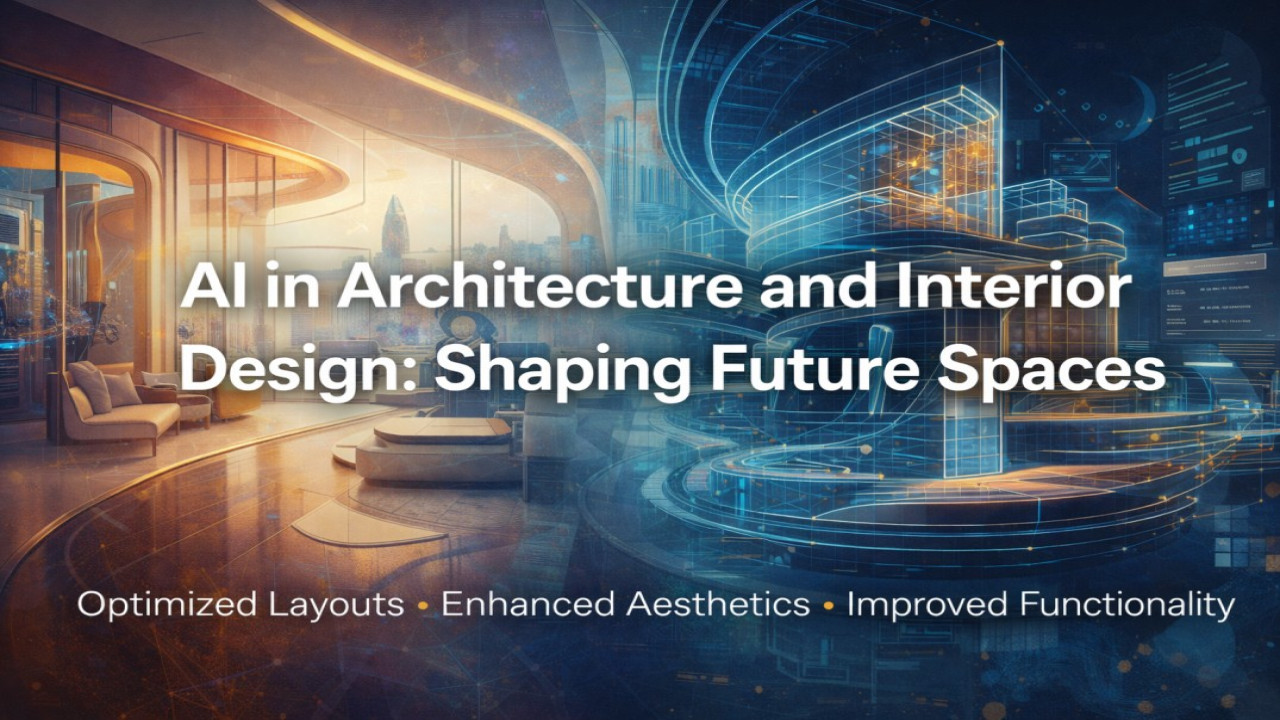
AI in Architecture and Interior Design: Shaping Future Spaces
Architecture and interior design are entering a new era powered by artificial intelligence. From concept development to space optimization, AI is reshaping how environments are designed, experienced, and lived in.
Smarter Design from Concept to Reality
AI assists architects and interior designers from the earliest stages of planning. By analyzing space requirements, light conditions, materials, and user behavior, AI helps generate optimized layouts that balance aesthetics with functionality.
Data-Driven Spatial Optimization
Artificial intelligence can simulate how people move and interact within spaces. This allows designers to create environments that improve comfort, flow, and usability—whether in homes, offices, retail spaces, or public buildings.
Personalized Interior Experiences
AI enables interiors to be tailored to individual preferences. From color schemes and furniture placement to lighting and acoustics, spaces can adapt to the lifestyle and needs of their users, creating a more personal and meaningful experience.
Sustainable and Efficient Design
Sustainability is a major focus in modern architecture. AI helps optimize energy usage, material selection, and environmental impact. Smart systems can predict energy consumption and suggest eco-friendly solutions without compromising design quality.
Blending Aesthetics with Technology
AI-driven tools allow designers to explore bold forms, innovative materials, and futuristic aesthetics. Generative design introduces shapes and structures that were previously difficult—or impossible—to achieve.
The Designer’s Vision Remains Central
Despite advanced automation, architecture and interior design remain deeply human disciplines. Designers guide the vision, define the atmosphere, and ensure that spaces evoke emotion and purpose. AI enhances this vision—it does not replace it.
The Future of Living Spaces
As AI becomes more integrated, future spaces will be adaptive, intelligent, and responsive. Architecture will no longer be static—it will evolve alongside the people who inhabit it.
At Styon Art, we explore how technology transforms not only art and design, but the spaces we live in.
Discover the future of creative environments at
👉 https://styonart.com

Comments (0)
No comments found