

How AI Art Is Transforming Education: Creativity, Engagement, and Visual Learning
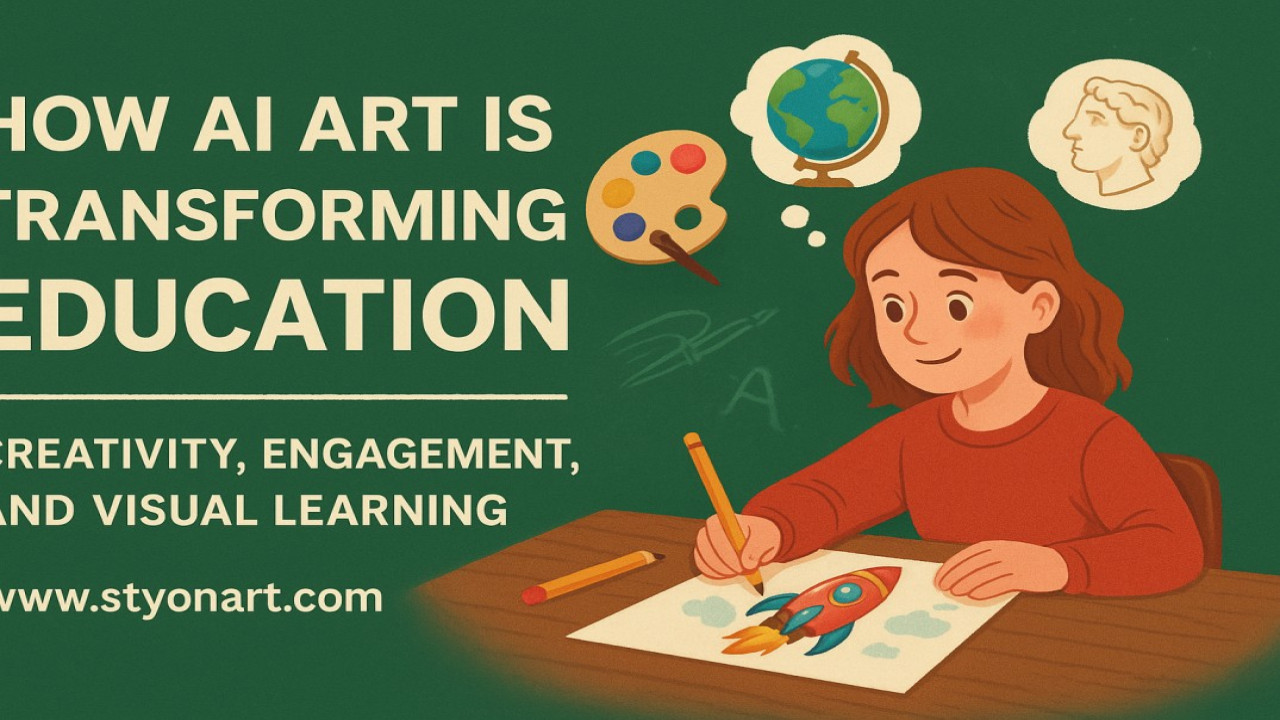
How AI Art Is Transforming Education: Creativity, Engagement, and Visual Learning
Education is rapidly evolving. With students growing up in a digital-first world, traditional teaching methods are no longer enough. AI-generated art is becoming a powerful educational tool that boosts creativity, strengthens engagement, and supports visual learning across all ages.
Platforms like StyonArt help educators integrate AI-generated visuals into lessons, presentations, and creative projects.
AI isn’t replacing educators —
it’s giving them new ways to inspire.
1. Making Learning More Visual and Engaging
AI-created visuals make complex subjects easier to understand. Teachers can generate:
historical scenes,
scientific diagrams,
visual metaphors,
artistic representations,
animated concepts.
Students respond better to visual explanations, leading to higher retention and motivation.
2. Encouraging Creativity in the Classroom
With AI tools, students can:
illustrate their stories,
design characters,
visualize emotions,
create art without needing advanced drawing skills,
experiment with multiple styles.
AI empowers every student to be an artist, not just the traditionally talented ones.
3. Personalized Learning Materials
AI allows educators to create personalized visual resources for:
different age groups,
diverse learning styles,
cultural backgrounds,
specific themes or holidays.
Personalization helps students feel connected to the learning experience.
4. Breaking Language Barriers Through Visual Communication
Visuals help explain:
abstract ideas,
vocabulary,
cultural topics,
scientific models.
AI-generated images support multilingual classrooms by making learning globally accessible.
5. Faster Preparation for Teachers
Teachers often lack time to create unique visuals.
AI art helps generate:
worksheets,
creative slides,
posters,
story prompts,
lesson illustrations,
within seconds.
This reduces workload and increases lesson quality.
6. Improving Critical Thinking and Interpretation Skills
Students can analyze AI-generated art to explore:
symbolism,
meaning,
emotions,
storytelling,
cultural perspectives.
They learn to think deeply and critically about visuals.
7. Supporting Special Education Needs
Visual learning is extremely valuable for students with:
ADHD,
dyslexia,
autism,
processing differences.
AI visuals help simplify concepts and keep students engaged without overwhelming them.
8. Enabling Cross-Disciplinary Learning
AI art supports:
literature (illustrated stories),
science (visual models),
geography (environment scenes),
history (ancient civilizations),
art class (style exploration).
It becomes a universal tool across the entire curriculum.
9. The Future of AI in Education
Soon, AI will enable:
fully visualized textbooks,
interactive learning journeys,
personalized educational companions,
real-time concept illustration,
AI-enhanced classroom creativity labs.
Education will be more visual, more creative, and more accessible than ever.
Conclusion
AI art is revolutionizing education by enhancing creativity, engagement, and visual understanding. From classrooms to online learning, AI-generated visuals help students learn faster and teachers teach more effectively.
Platforms like StyonArt enable schools, educators, and students to integrate stunning AI visuals into every part of the learning experience.

Comments (0)
No comments found