
How AI Art Is Transforming Human Creativity and Everyday Life
How AI Art Is Transforming Human Creativity and Everyday Life
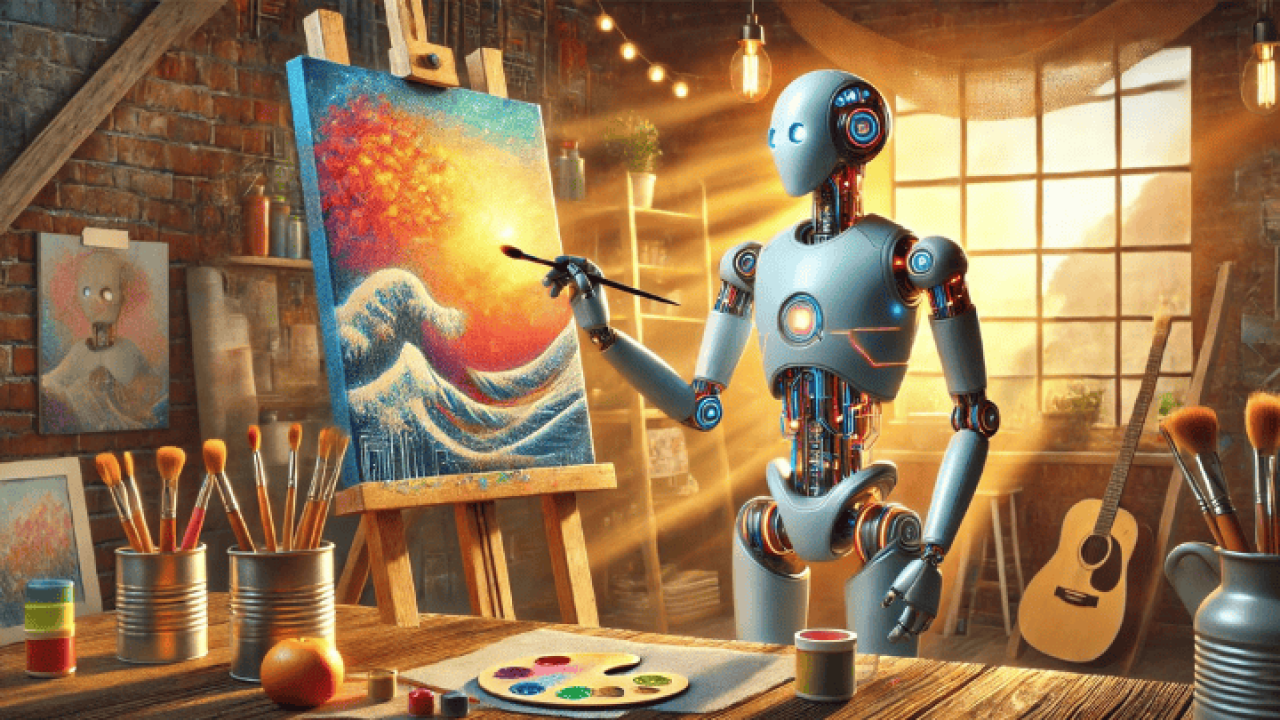
AI-generated art is no longer a futuristic concept—it has become a global cultural force that reshapes how people create, feel, communicate, and do business. From democratizing creativity to influencing mental wellness and revolutionizing industries, AI art is redefining the modern artistic experience in ways humanity has never seen before.
What Is AI Art?
AI art refers to artwork created using artificial intelligence models capable of:
generating images from text prompts,
transforming photos into illustrations,
producing unique styles such as caricature, anime, and hyper-realism,
enhancing or redesigning existing images.
These systems don’t “feel” emotions, but they learn patterns from millions of examples, allowing them to generate entirely new visual expressions.
Democratizing Creativity for Everyone
One of the greatest impacts of AI art is accessibility.
People who have never drawn or painted before can now create stunning visuals in seconds. This shift:
boosts confidence in personal creativity,
opens artistic expression to a global audience,
reduces barriers for beginners and entrepreneurs.
AI has turned creativity into a universal skill rather than a talent limited to a few.
The Emotional and Therapeutic Benefits
Creating art—even with the help of AI—has mental and emotional benefits.
Many users experience:
reduced stress,
improved focus,
emotional expression through visual storytelling,
moments of mindfulness.
The process of imagining, describing, and refining visual ideas stimulates dopamine release and supports emotional well-being.
A Revolution in Creative Industries
AI has transformed the way designers, marketers, and creators work. Industries impacted include:
graphic design
marketing & advertising
publishing and illustration
animation and gaming
photography
product design
Companies now use AI to create:
personalized campaigns,
faster content pipelines,
high-quality product mockups,
unique branding materials.
The result is a more efficient and accessible creative ecosystem.
Global Accessibility and Inclusion
With just a smartphone or laptop, anyone can create professional-level artwork.
This empowers:
young creators in developing countries,
beginners without artistic training,
small businesses that can’t afford expensive design studios,
people with disabilities who find digital creativity more accessible.
AI art breaks geographical, financial, and physical barriers.
Inspiration for Traditional Artists
Rather than replacing traditional art, AI often enhances it. Artists use AI to:
brainstorm ideas,
explore concepts quickly,
create composition drafts,
experiment with colors and shapes,
push their creativity into new territories.
Human imagination remains the core driver—AI is simply a powerful tool.
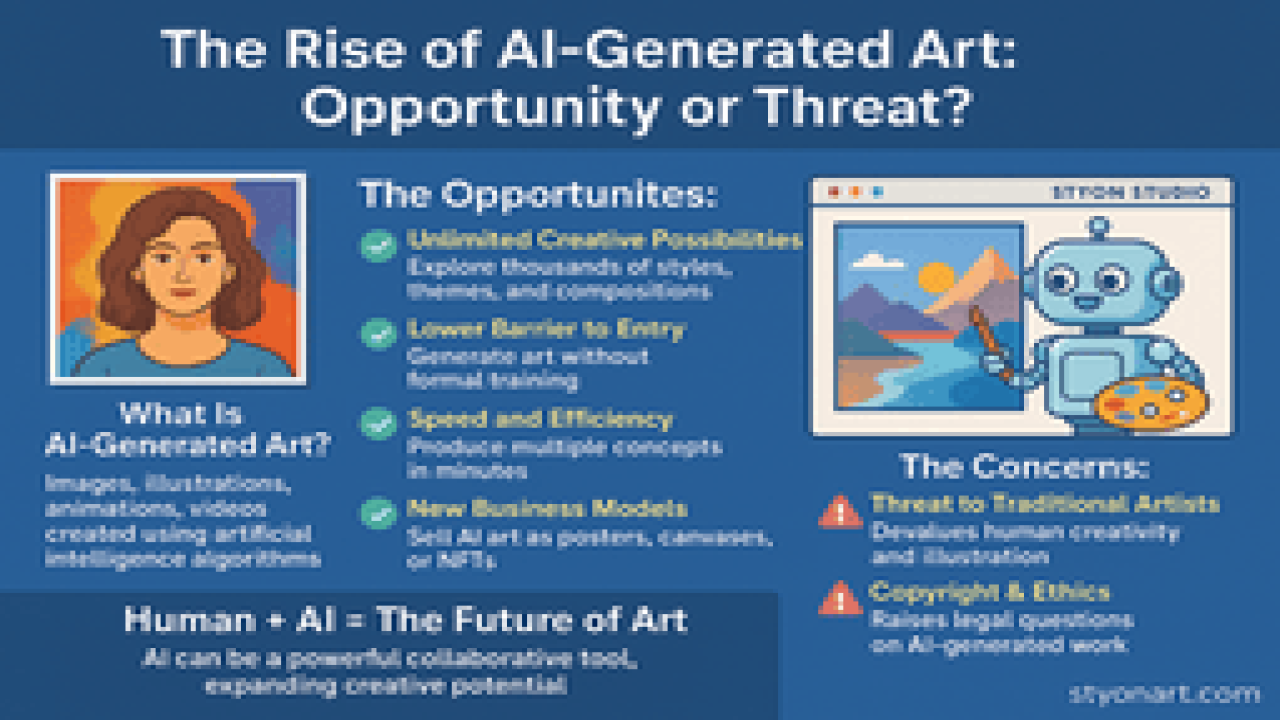
Benefits of AI Art
✔ Accessible to anyone
✔ Extremely fast creation
✔ Hundreds of styles available
✔ Cost-effective for creatives and businesses
✔ Personalized results
✔ Ideal for marketing and product visuals
Challenges and Controversies
Despite its advantages, AI art brings important debates:
Copyright Considerations
Questions remain about inspiration vs. imitation.
“Is it real art?”
Some argue AI art lacks authenticity, but artistry lies in vision, prompt crafting, and intention.
Technology Dependence
Relying too much on AI may reduce interest in traditional skills.
Misuse Risks
AI can create false imagery or deepfakes if used irresponsibly.
Economic and Business Impact
AI art has created entirely new professions:
AI designer
Prompt engineer
AI illustrator
Visual content creator
Brands use AI to develop:
posters and canvas designs,
advertisement visuals,
product previews,
custom gifts and decor.
This leads to lower production costs and higher creative output.
The Future of AI Art
The next decade will bring remarkable innovations:
AI-powered interactive art
hyper-personalized visual experiences
deeper collaboration between artists and AI
real-time emotional-responsive images
fully customized artwork based on memory, voice, or personal moments
AI is not replacing art. It is expanding it.
Conclusion
AI art has a profound influence on our lives. It democratizes creativity, empowers emotional expression, fuels new careers, and transforms industries. The future of art will be built on human imagination—supported by the limitless possibilities of artificial intelligence.
Comments (0)
No comments found